
Biophilic Villa. The Great Verdant Artery in Apokoronas
Apokoronas, Vamos, Chania. Crete / 2023
The villa’s design rejects the standard practice of ‘conquering’ a site. Instead, it adopts a minimal cut-fill philosophy, treading lightly across the natural gradient to preserve the integrity of the soil and establish the sustainable longevity of the construction, Rather than flattening the terrain into artificial terraces, the floor plan follows the contoured topography. Moving through the villa becomes a sensory negotiation of levels, where spaces unravel in sync with the rising and falling earth.
Designed with climatically sensitive solar passive strategies, the villa functions as a living lung. Its sweeping, dual-sloped roofs feature deep overhangs and traditional clay tiles that shield the interior from the zenith sun, allowing hot air to escape naturally while shading the expansive verandahs.
Intricate brick jaalis filter the intense Mediterranean glare, inviting diffused light and a constant cross-breeze into every habitable space, ensuring year-round thermal comfort without mechanical dependence. This “breathing” architecture restores ecological memory, blurring the boundary between the built and the unbuilt to allow the surrounding landscape to reclaim its continuity across the single-story footprint.
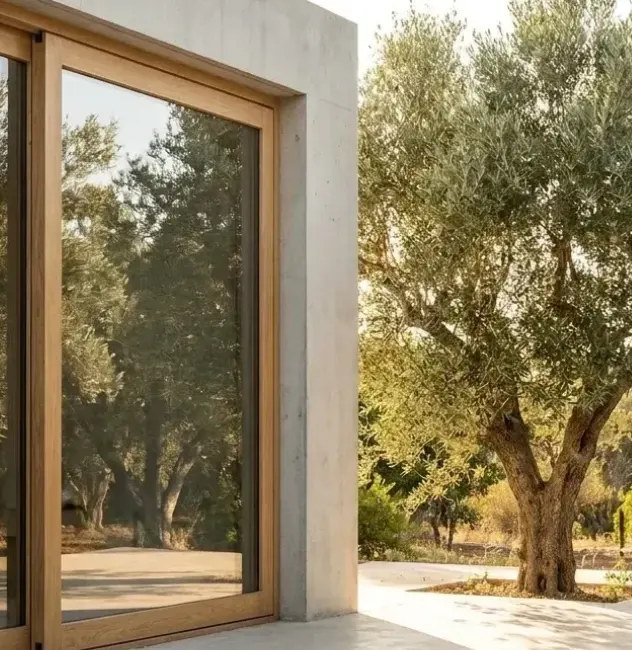
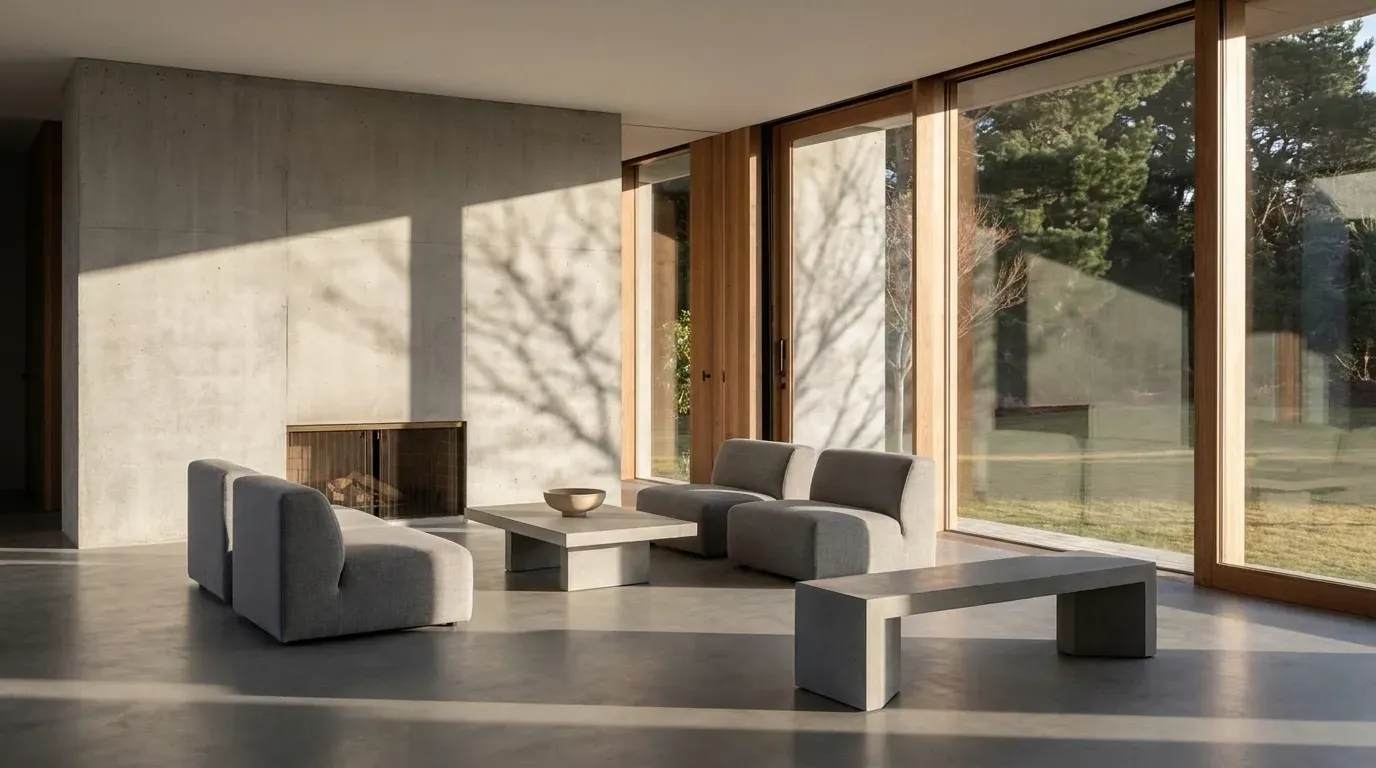
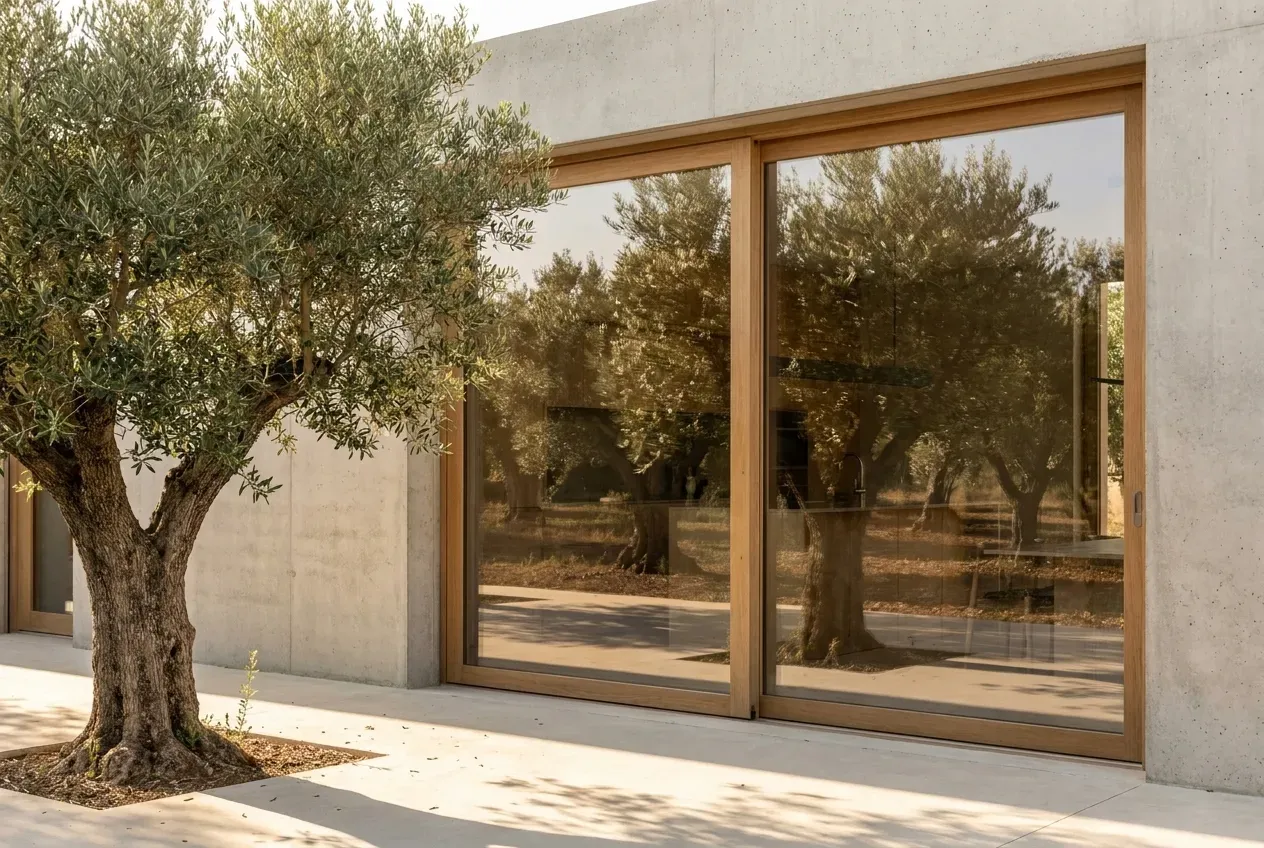
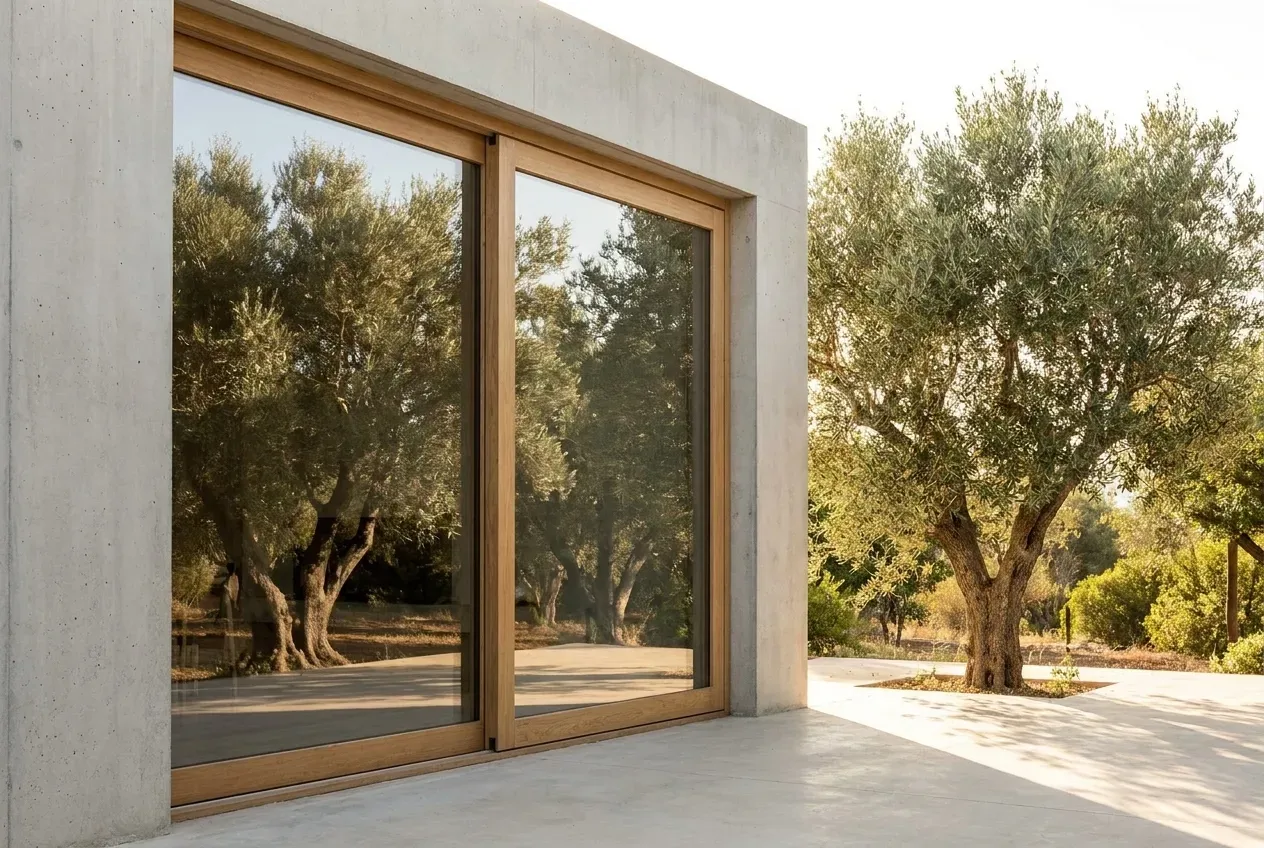
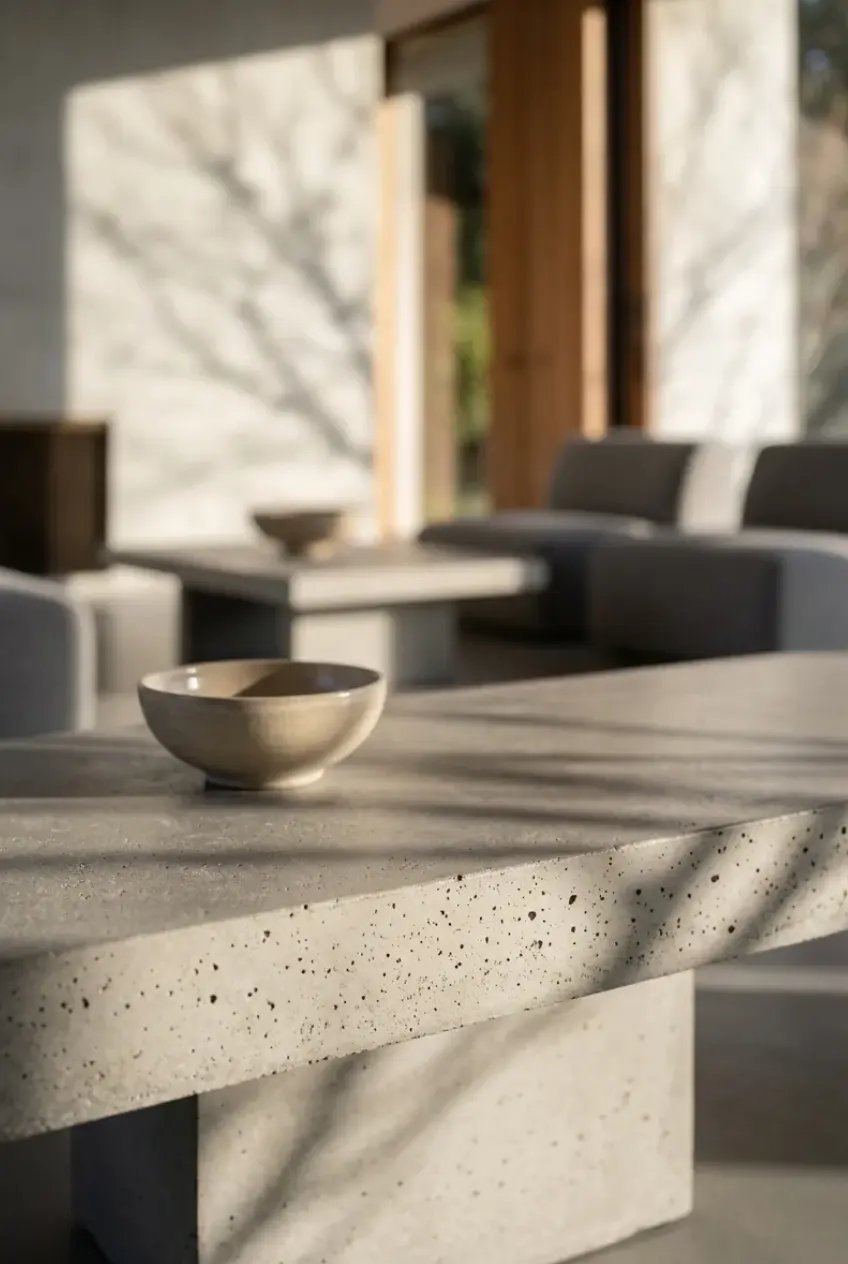
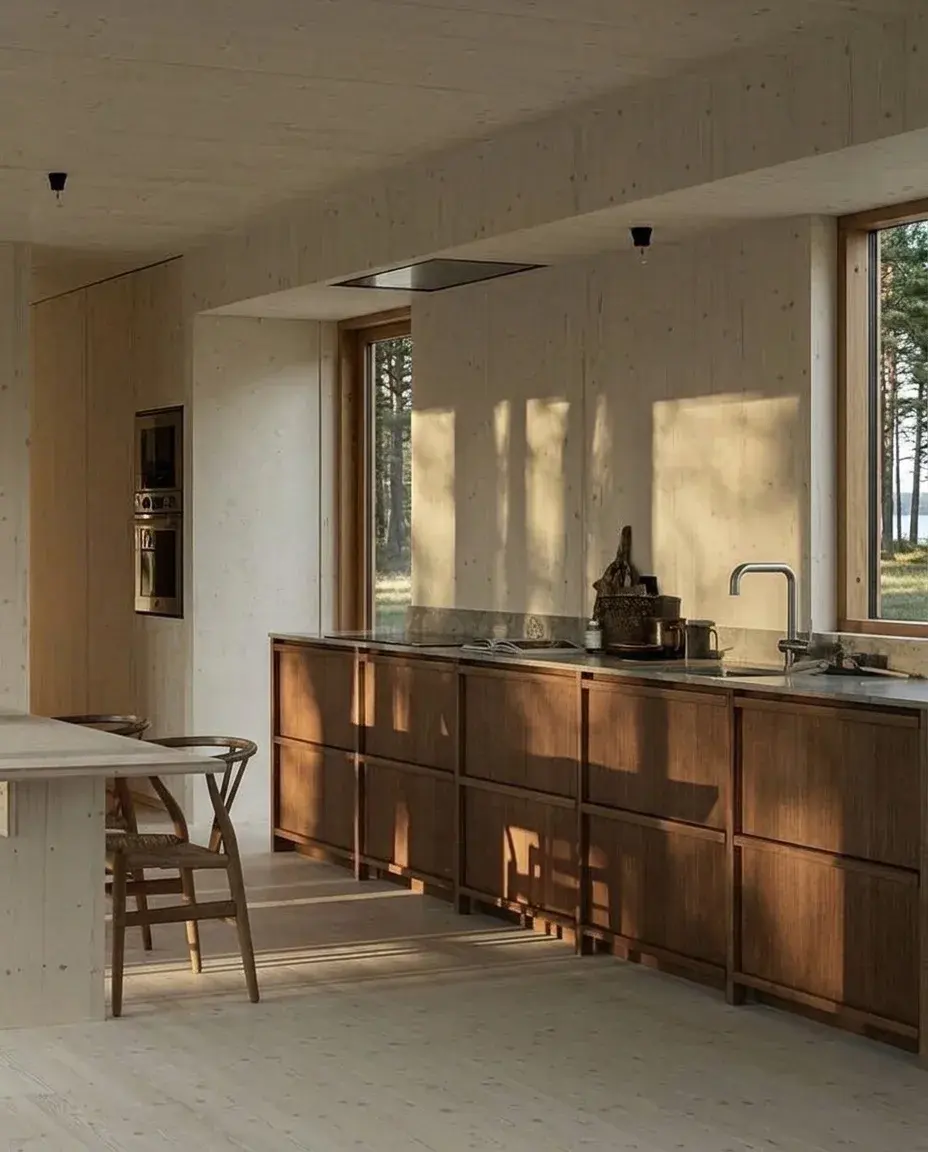
The aesthetic is a sophisticated dialogue between raw, elemental simplicity and artisanal warmth. Visible concrete serves as the primary skin—honest, modern, and reflective of the sun-bleached Cretan limestone—while custom wooden oak frames and locally produced brick instill a sense of timeless tactility.
This marriage of “brutalist-organic” materials is supported by state-of-the-art energy-saving systems, creating a home that is both technologically advanced and physically connected to the earth. This is architecture in its most elemental form: a way of listening, inhabiting, and ever-evolving alongside the ancient olive groves.
Materiality and Design Philosophy
The biophilic philosophy of this villa is centered on the concept of non-extractive architecture, where the home functions as a living organism within the Apokoronas olive groves. By utilizing a minimal cut-fill philosophy, the design preserves the site’s natural topography, allowing the single-level floor plan to follow the gentle gradient of the earth rather than flattening it.
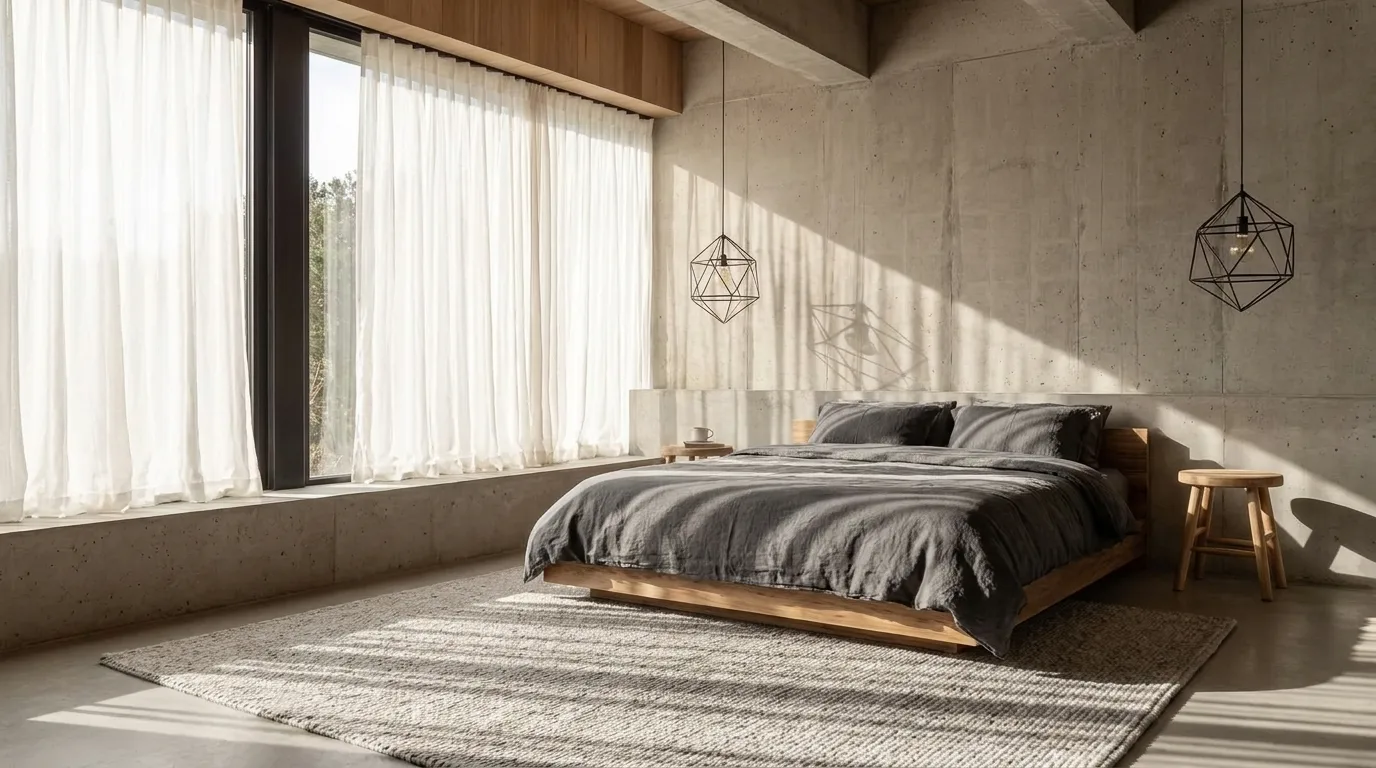
The materiality reinforces this dialogue through a “brutalist-organic” palette that balances modern precision with artisanal warmth. Visible concrete acts as a primary thermal mass, its sun-bleached grey tones echoing the local limestone, while hand-crafted European oak frames and local brick provide a tactile connection to the environment.
Apokoronas Biophilic Villa
A Dialogue in Monochromatic Depth
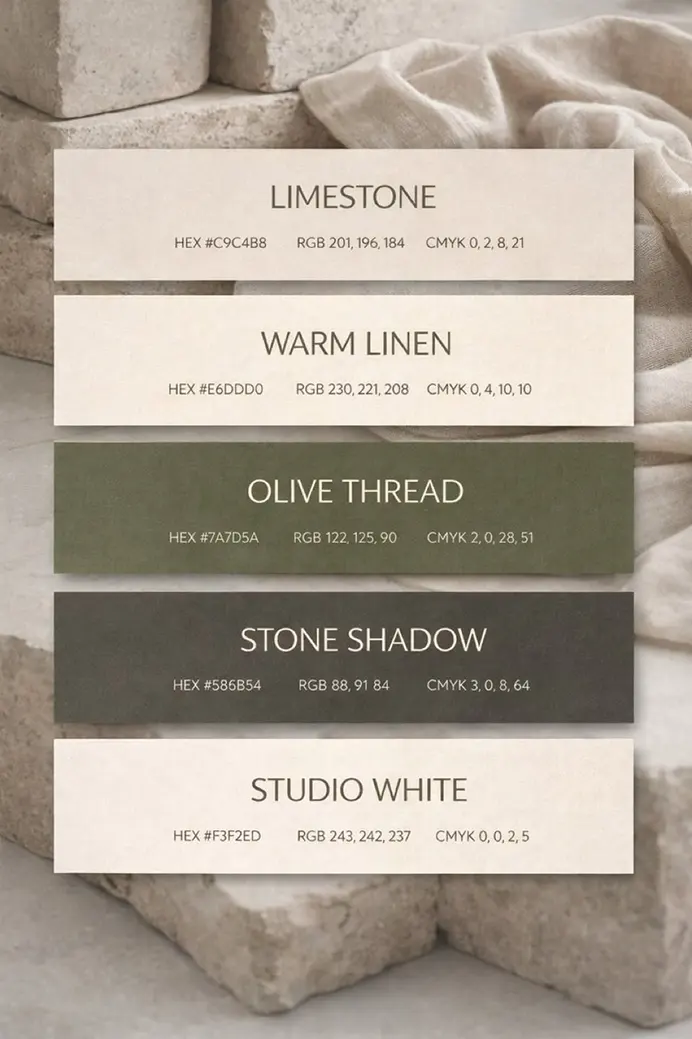
The color palette for the Biophilic Villa is grounded in a foundation of elemental earth tones, drawing inspiration from the raw materials of the Apokoronas landscape. Limestone, a pale, sun-bleached sand tone, serves as the primary base, mirroring the local stone used in the villa’s construction.
This is layered with Warm Linen, a soft, organic cream that provides a tactile counterpoint to the visible concrete. These foundational hues soften the modern aesthetic, appearing in natural textiles and finishes to create a calm, breathable environment that ensures the interior spaces feel deeply rooted in the surrounding terrain.
The depth of the design is defined by sophisticated accents that pull the colors of the olive grove directly into the home. Olive Thread acts as the crucial biophilic connector, its muted green hue reflecting the silver-green canopy of the trees outside.
This is balanced by Stone Shadow, a deep, complex charcoal-green used to ground structural details and define the play of shadow across the concrete surfaces.
Rooted. Adaptive. Evolving.
This is architecture in its most elemental form—not a statement of dominance over the land, but a way of listening, inhabiting, and ever-evolving alongside the ancient olive groves. By merging state-of-the-art energy systems with a raw, “brutalist-organic” materiality, the villa stands as a testament to the future of sustainable luxury in Crete.
It is more than a residence; it is a permanent invitation to slow down and reconnect, offering a quiet, sophisticated sanctuary where the boundary between the built environment and the natural world finally dissolves.
Interior Architectural Design: ARENCOS
Supervision & Design: ARENCOS
Interior Architects: ARENCOS & Partners
Mechanical Equipment: Various Suppliers
Client: Private (GDPR requested)
Location: Apokoronas
Status: Completed
Date:
December 30, 2023
Category:
Tags: